
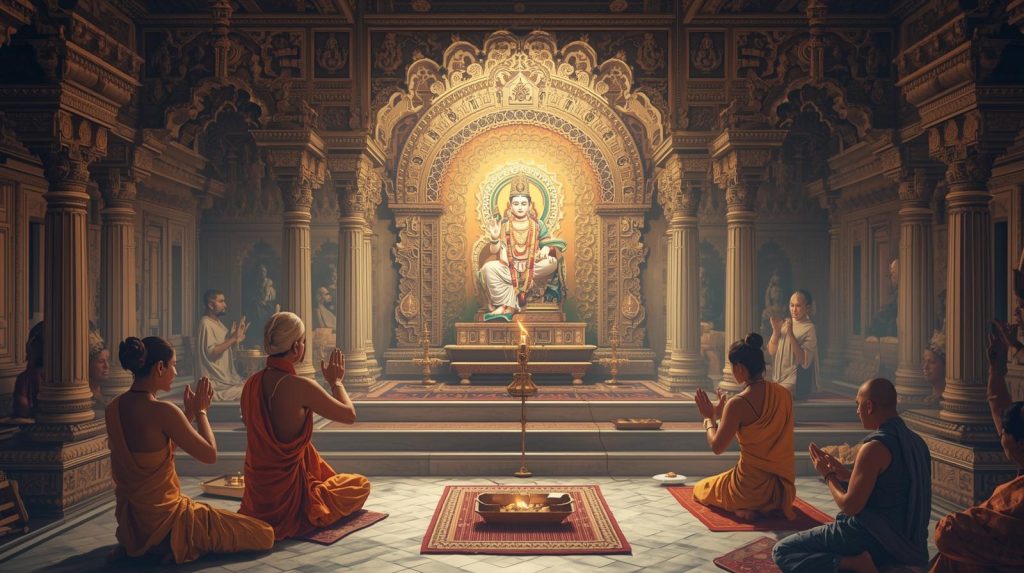
Bhagwan Shantinath, the 16th Tirthankara in Jainism, is deeply revered for his embodiment of peace, compassion, and wisdom. Across Jain communities, devotees honor him through sacred rituals and worship practices that nurture faith and spiritual connection. From daily prayers to grand festivals, these practices serve as pathways for devotees to deepen their devotion and align with Shantinath’s timeless teachings.
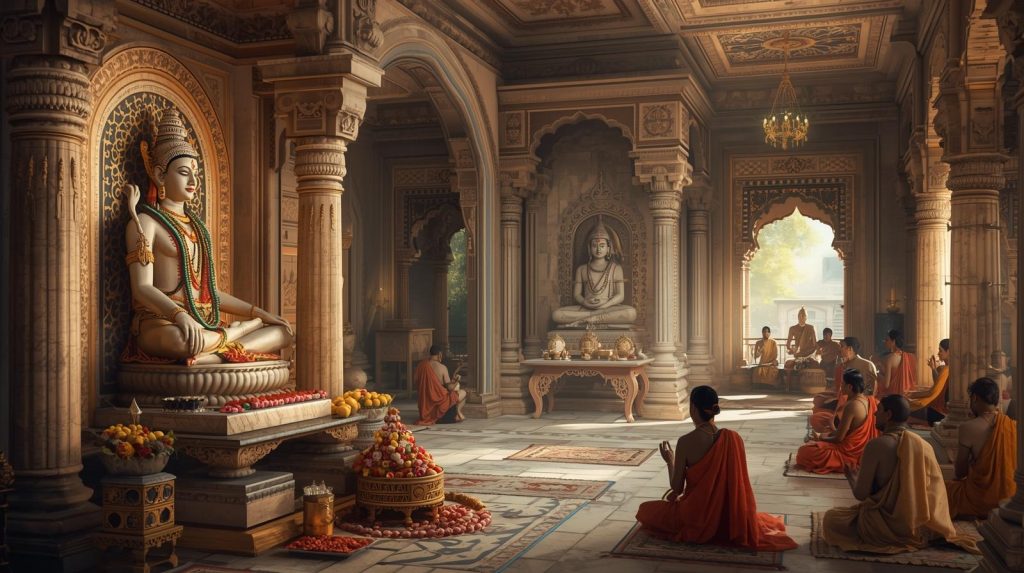
Daily Worship and Devotional Practices
1. Prayers and Mantras
Devotees begin their day with recitations of sacred mantras such as the Namokar Mantra, offering reverence to Tirthankaras, including Shantinath. These prayers cultivate mindfulness and inner tranquility.
2. Abhisheka (Ritual Bathing)
In temples, the idol of Shantinath is ceremonially bathed with water, milk, saffron, and sandalwood. This ritual, known as Abhisheka, symbolizes purification of the soul and devotion to the divine.
3. Aarti and Mangal Divo
Devotees perform Aarti (waving of lamps) and offer Mangal Divo (auspicious light) to Shantinath, signifying the removal of ignorance and the illumination of spiritual wisdom.
4. Meditation and Reflection
Alongside rituals, meditation is an integral part of worship. By meditating on Shantinath’s virtues, devotees seek peace, detachment, and spiritual elevation.
Festivals Dedicated to Bhagwan Shantinath
Shanti Jayanti
The birth anniversary of Shantinath, celebrated as Shanti Jayanti, is observed with grandeur in Jain temples. Devotees gather for processions, community prayers, and spiritual discourses, reaffirming their faith in his teachings of peace.
Paryushana and Das Lakshan Parva
During Jain festivals like Paryushana and Das Lakshan Parva, Shantinath is honored through fasting, scriptural studies, and community worship. These festivals emphasize penance, forgiveness, and renewal of spiritual commitment.
Temple Worship Practices
Magnificent temples dedicated to Shantinath across India—including in Rajasthan, Maharashtra, and Gujarat—are centers of devotion. Worshippers visit to perform rituals, participate in spiritual discourses, and seek blessings. The artistry and serenity of these temples enhance the devotional experience, connecting devotees with Shantinath’s divine presence.
The Spiritual Significance of Rituals
Each ritual dedicated to Shantinath holds symbolic meaning. Ritual bathing reflects inner cleansing, Aarti represents enlightenment, and meditation fosters self-realization. Together, these practices guide devotees on the path of non-violence, detachment, and peace—the essence of Shantinath’s teachings.
Conclusion
The rituals and worship practices devoted to Bhagwan Shantinath are not merely traditions but spiritual pathways that connect devotees with his profound teachings. Through prayers, meditation, and festivals, followers celebrate his legacy and embrace a life of peace, compassion, and spiritual growth. Shantinath’s worship continues to inspire communities, fostering harmony in both personal and collective life.